
Physical Sequelae
Hemiplegia and Deformity
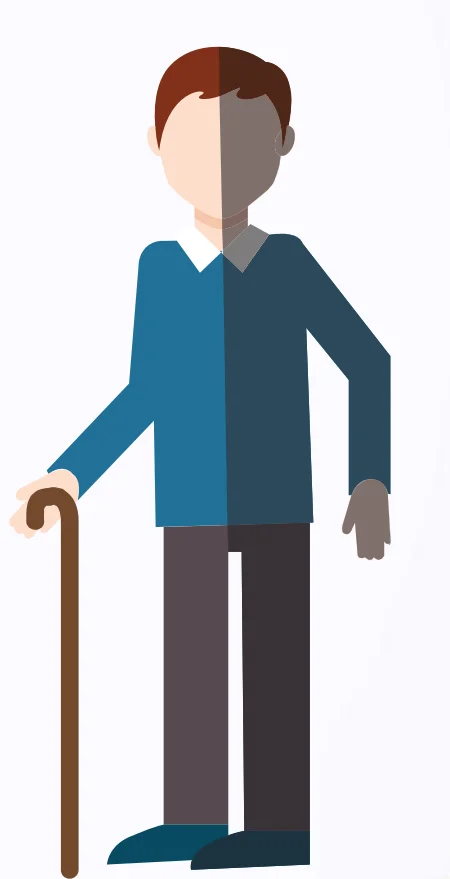
Hemiplegia occurs on the opposite side of the body from the brain region injured by the stroke. For example, a stroke in the left side of the brain causes paralysis of the right arm and leg.
Deformity
The paralyzed arm and leg can stiffen into the following deformities.
- Upper extremity deformities: adducted and internally rotated shoulder (the arm held against the body), and flexed elbow, wrist, and fingers.
- Lower extremity deformities: retracted and elevated pelvis, adducted and extended hip, and flexed knee and sole.
To learn how hemiplegic patients can dress or transfer from a bed to a wheelchair, see Help with daily life.